
My child is tired: how to keep up regular Quran study without conflict
By Abdoulaye Mouhidine Sow, director and founder of Rewayah Academy
Three sessions a week, after school, is demanding. One day your child sighs as they open their book, drags their feet before the session or says they can’t take any more, and you wonder whether to insist or let go. Muslim tradition has known this tiredness for a long time, and it has precise things to say about it. Here is how to understand it, and how to help your child keep going, firmly and gently.
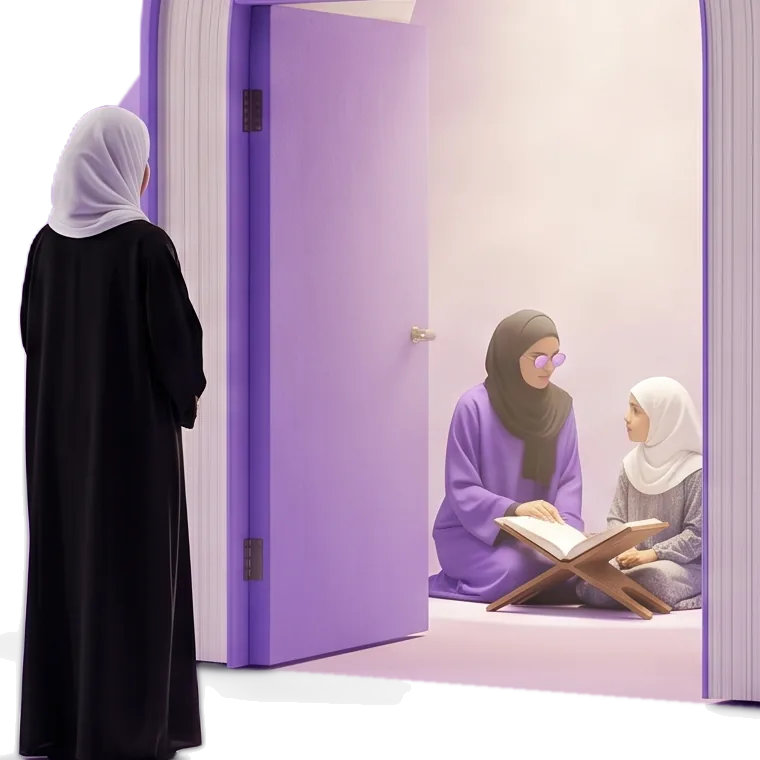
A long road, which is sometimes tiring
Learning the Quran does not take a few weeks. A child first learns the letters, then reading with vowel marks, then reading in the Quran and the first surahs, and each step takes months of regular effort. On such a long road, tiredness is not an accident: it is part of the journey, for children as for adults. It does not mean your child is not made for learning; it often means that something in their rhythm needs adjusting.
The Quran sets a measure every parent can keep in mind: in Surah Al-Baqarah (Quran 2:286), it states that Allah does not burden any soul beyond what it can bear. This verse speaks of what Allah asks of His servants; it also teaches anyone who raises a child a sense of measure. The load given to a child must fit their size: demanding enough for them to progress, never so heavy that it crushes them.
لَا يُكَلِّفُ ٱللَّهُ نَفۡسًا إِلَّا وُسۡعَهَاۚ لَهَا مَا كَسَبَتۡ وَعَلَيۡهَا مَا ٱكۡتَسَبَتۡۗ رَبَّنَا لَا تُؤَاخِذۡنَآ إِن نَّسِينَآ أَوۡ أَخۡطَأۡنَاۚ رَبَّنَا وَلَا تَحۡمِلۡ عَلَيۡنَآ إِصۡرࣰا كَمَا حَمَلۡتَهُۥ عَلَى ٱلَّذِينَ مِن قَبۡلِنَاۚ رَبَّنَا وَلَا تُحَمِّلۡنَا مَا لَا طَاقَةَ لَنَا بِهِۦۖ وَٱعۡفُ عَنَّا وَٱغۡفِرۡ لَنَا وَٱرۡحَمۡنَآۚ أَنتَ مَوۡلَىٰنَا فَٱنصُرۡنَا عَلَى ٱلۡقَوۡمِ ٱلۡكَٰفِرِينَ
And Surah Ash-Sharh repeats the same promise twice in a row (Quran 94:5-6): with hardship comes ease. The difficulty of a child stumbling over a letter is never alone. Often, the parent’s role is to help them see the ease that comes with it: what they already know, how far they have come, and the next step, which is not so high.
فَإِنَّ مَعَ ٱلۡعُسۡرِ يُسۡرًا إِنَّ مَعَ ٱلۡعُسۡرِ يُسۡرࣰا
Tiredness, boredom or refusal: three different situations
Before acting, you need to know what you are dealing with. Tiredness shows at the end of the day: attention drops, eyes sting, but your child still wants to go. It calls for simple answers: sleep, meals, the time of day.
Boredom is something else. Your child already knows the material, or on the contrary can no longer keep up. Then you need to talk to the teacher, to check that the level is right. Refusal, finally, shows up before your child has even tried. It often hides a specific cause: fear of making mistakes in front of others, tension at home around the session. Start by listening.
If the tiredness lasts, goes beyond learning or comes with anxiety, talk to a health professional. No method replaces their advice.
What scholars already said about the tired child
Long before modern studies, Muslim scholars looked closely at the tiredness of a child who is learning. In the 11th century, Imam al-Ghazali devoted a passage of his Revival of the Religious Sciences (Ihya’ ‘ulum ad-din) to the education of children. He writes that after leaving school (the kuttab), a child should be allowed to play a good game that rests them from the fatigue of school, without tiring themselves out playing. For him, keeping a child from playing and forcing them to study without a break deadens their heart, ruins their intelligence and makes their life bitter, to the point that they look for a way to escape study altogether. (Ihya’ ‘ulum ad-din, volume 3, p. 73, Dar al-Ma’rifa edition.)
وَيَنْبَغِي أَنْ يُؤْذَنَ لَهُ بَعْدَ الِانْصِرَافِ مِنِ الْكُتَّابِ أَنْ يَلْعَبَ لَعِبًا جَمِيلًا يَسْتَرِيحُ إِلَيْهِ من تعب المكتب بحيث لا يتعب في اللعب فَإِنَّ مَنْعَ الصَّبِيِّ مِنَ اللَّعِبِ وَإِرْهَاقَهُ إِلَى التَّعَلُّمِ دَائِمًا يُمِيتُ قَلْبَهُ وَيُبْطِلُ ذَكَاءَهُ وَيُنَغِّصُ عَلَيْهِ الْعَيْشَ حَتَّى يَطْلُبَ الْحِيلَةَ فِي الْخَلَاصِ مِنْهُ رَأْسًا
Al-Ghazali was not a lax educator: the same chapter calls for discipline. But he knew that an exhausted child no longer learns, and that too much pressure eventually makes them run away from what we wanted to pass on. For him, play is not a reward handed out when everything is done; it is the rest that makes it possible to come back the next day.
Three centuries later, Ibn Khaldun devoted a chapter of his Muqaddimah to this question. Its title, in de Slane’s French translation, is blunt: too much severity in teaching harms students. He explains that being too harsh with children, especially when they are still very young, is very harmful to them, because it gives their mind a bad disposition, inclines them to laziness and leads them to lie. And he concludes that a tutor should not be too severe with his students, nor a father with his children. (Les Prolégomènes, French translation by William Mac Guckin de Slane, part three, 1868, pp. 290-291.)
Ibn Khaldun does not ask us to give up all expectations; he warns against excess. That is the balance every parent is looking for: keeping the appointment, without turning the session into an ordeal.
The one who recites with difficulty has two rewards
Tradition offers precious comfort here. The Prophet (peace and blessings be upon him) said that the one who recites the Quran skilfully will be with the noble and righteous scribe angels, and that the one who recites it stumbling, finding it hard, will have two rewards (reported by Muslim, no. 798 a; in similar terms by al-Bukhari, no. 4937).
الْمَاهِرُ بِالْقُرْآنِ مَعَ السَّفَرَةِ الْكِرَامِ الْبَرَرَةِ وَالَّذِي يَقْرَأُ الْقُرْآنَ وَيَتَتَعْتَعُ فِيهِ وَهُوَ عَلَيْهِ شَاقٌّ لَهُ أَجْرَانِ
These words change how we see things. The effort of a child who stumbles over the letters is not a delay: it is rewarded. Tell your child so, in simple words. And tell yourself too: your patience is part of this work.
The Quran itself reassures, and this verse comes back four times in Surah Al-Qamar (Quran 54:17): Allah has made the Quran easy to reflect on, and asks whether there is anyone who will take heed.
وَلَقَدۡ يَسَّرۡنَا ٱلۡقُرۡءَانَ لِلذِّكۡرِ فَهَلۡ مِن مُّدَّكِرࣲ
Gentleness, a way of teaching
The Prophet (peace and blessings be upon him) told Aisha that Allah is Gentle and loves gentleness in all things (reported by al-Bukhari, no. 6927). He also said that gentleness is never in anything without making it beautiful, and is never taken out of anything without making it ugly (reported by Muslim, no. 2594).
إِنَّ اللَّهَ رَفِيقٌ يُحِبُّ الرِّفْقَ فِي الأَمْرِ كُلِّهِ
إِنَّ الرِّفْقَ لاَ يَكُونُ فِي شَىْءٍ إِلاَّ زَانَهُ وَلاَ يُنْزَعُ مِنْ شَىْءٍ إِلاَّ شَانَهُ
He lived this gentleness with those around him, and with children. Anas ibn Malik relates that he served the Prophet for ten years, and that he never once said to him so much as “uff”, nor asked him why he had done something or why he had not done it (reported by al-Bukhari, no. 6038, and Muslim, no. 2309). And the Prophet (peace and blessings be upon him) said that he would begin the prayer intending to make it long, then hear a child crying and shorten it, because he disliked causing hardship to the child’s mother (reported by al-Bukhari, no. 707, and Muslim, no. 470). If the Prophet (peace and blessings be upon him) shortened the prayer so as not to burden a mother, a parent can certainly, one evening, shorten an exhausted child’s preparation, without giving up the session.
خَدَمْتُ النَّبِيَّ صلى الله عليه وسلم عَشْرَ سِنِينَ، فَمَا قَالَ لِي أُفٍّ. وَلاَ لِمَ صَنَعْتَ وَلاَ أَلاَّ صَنَعْتَ
إِنِّي لأَقُومُ فِي الصَّلاَةِ أُرِيدُ أَنْ أُطَوِّلَ فِيهَا، فَأَسْمَعُ بُكَاءَ الصَّبِيِّ، فَأَتَجَوَّزُ فِي صَلاَتِي كَرَاهِيَةَ أَنْ أَشُقَّ عَلَى أُمِّهِ
He even made tenderness towards the young a sign of belonging: he said that whoever does not show mercy to our young and does not honour our elders is not one of us (reported by at-Tirmidhi, no. 1920, and Abu Dawud, no. 4943).
لَيْسَ مِنَّا مَنْ لَمْ يَرْحَمْ صَغِيرَنَا وَيَعْرِفْ شَرَفَ كَبِيرِنَا
Firmness and gentleness are therefore not opposites. You keep the appointment of the session; you soften the way you get there.
Regularity matters more than length
The Prophet (peace and blessings be upon him) said that the deeds most loved by Allah are those done consistently, even if they are few (reported by al-Bukhari, no. 6464, and Muslim, no. 783 b). These words apply to learning the Quran as to every deed: a little, but every day.
أَحَبُّ الأَعْمَالِ إِلَى اللَّهِ تَعَالَى أَدْوَمُهَا وَإِنْ قَلَّ
Research on learning points in the same direction. Studies that compare methods generally show that spreading work out over time helps people remember better than cramming it into one go; they also rank testing yourself on what you have just learned among the most useful methods. Ask your child to recite to you, without looking, what they already know.
Sleep matters as much as method. Since 2016, a learned society of sleep medicine has recommended 9 to 12 hours of sleep per 24 hours between the ages of 6 and 12, and 8 to 10 hours between 13 and 18; it links regularly shorter sleep to difficulties with attention, behaviour and learning. Before talking about motivation, look at bedtime.
What you can do at home
Set up a routine: the same time, the same place, the same materials. A fixed framework spares your child a daily negotiation. The session is not up for discussion; the preparation is what you adjust.
Get what is needed ready the day before, and check the connection ahead of time, so the session starts calmly. Keep preparation short: the work to prepare before the next class, nothing more. And, as al-Ghazali advised, give your child a real moment of play, which rests them without wearing them out.
You can also correct them, wisely. Ask them to recite what they know to you; if they make a mistake, correct it gently, one at a time, without stopping them at every word, and finish with encouragement. Choose the moment and keep it short: your child should not feel that class follows them everywhere, or that the Quran is a chore. If the same mistake keeps coming back, tell their teacher, who will work on it in class. Finally, name their small victories: a surah finished, a step completed, a reading without hesitation.
Finally, there is what home does in silence: the parents’ prayer. The Quran relates the prayer of Ibrahim (Quran 14:40), who asks his Lord to make him and some of his descendants steadfast in prayer, and to accept his supplication. And it describes the servants of the Most Merciful (Quran 25:74) as those who ask their Lord to grant them, in their spouses and children, the comfort of their eyes, and to make them an example for the God-fearing. Praying for our children also reminds us that their success does not depend on our efforts alone.
رَبِّ ٱجۡعَلۡنِي مُقِيمَ ٱلصَّلَوٰةِ وَمِن ذُرِّيَّتِيۚ رَبَّنَا وَتَقَبَّلۡ دُعَآءِ
وَٱلَّذِينَ يَقُولُونَ رَبَّنَا هَبۡ لَنَا مِنۡ أَزۡوَٰجِنَا وَذُرِّيَّٰتِنَا قُرَّةَ أَعۡيُنࣲ وَٱجۡعَلۡنَا لِلۡمُتَّقِينَ إِمَامًا
What is best avoided
Do not compare your child with their brothers and sisters, or with other students. Never use the Quran as a punishment, and do not threaten to take it away: your child must not associate the Book with fear. Avoid correcting their mistakes in front of the class or the teacher, and avoid shouting just before the session.
The Prophet’s instruction (peace and blessings be upon him) sums up this attitude: make things easy and do not make them hard, give good news and do not drive people away (reported by al-Bukhari, no. 69).
يَسِّرُوا وَلاَ تُعَسِّرُوا، وَبَشِّرُوا وَلاَ تُنَفِّرُوا
When to talk to the teacher
Talk to them as soon as the tiredness or refusal lasts more than a few weeks, or as soon as your child says they are afraid of the session. Describe what you observe, with facts, and ask for a review. At Rewayah, you can write to support, who will answer you in writing.
Sources
In this English version, verses and hadiths are not quoted in translation: their meaning is summarised, with its reference. The French version of this article quotes the verses in Muhammad Hamidullah’s translation, as published by quran.com. Hadiths are given with their collection and number (sunnah.com numbering); the French version quotes the translation published by HadeethEnc where one exists, otherwise a translation of the meaning, marked as such.
The Arabic text of the verses is that of the Medina Mushaf, published by the King Fahd Complex for the Printing of the Holy Quran, with its pause marks. The Arabic text of the hadiths is that of the collections as given by sunnah.com, taken from the public hadith-api dataset; only the quoted words are reproduced, without their chain of transmission.
Al-Ghazali’s Arabic text is that of the Dar al-Ma’rifa edition of the Ihya’, as reproduced by the Shamela library; no published French translation of this passage was found, so the French version gives a translation of the meaning, which this English version summarises.
For 54:17, the online edition of Hamidullah’s French translation contains two typos, which the French version of this article corrects; the note in that same edition gives the correct word.